
The Artist's Guide to Licensing Your Work: What It Is, What It Pays, and How to Break In

Sweet friends, there's an income stream sitting right next to print-on-demand that can feel really confusing without a simpler explanation. It’s been around forever and pays some of us more than any single product line ever will. It's called art licensing. If you've ever wondered how one illustrator's floral pattern ended up on Target napkins, Anthropologie stationery, and a Papyrus greeting card all in the same year - this is how.
Licensing is one of the most misunderstood income streams in the entire creative industry. Artists dismiss it as something reserved for the already-famous, or they picture it as a distant corporate world requiring an agent, a portfolio in leather-bound presentation cases, and an MFA from somewhere impressive. None of that is true. Licensing has powered the careers of some of the most beloved illustrators of the last three decades, and the door is wider than most people realize.
Let’s talk about what licensing actually is, what it can pay, and what the real path looks like from where you're standing right now.
What art licensing actually is
At its simplest, licensing is renting out your art.
You keep ownership of the artwork. You keep the copyright. What you sell is permission - permission for a specific company to reproduce your design on a specific product, in a specific territory, for a specific window of time, in exchange for either an upfront fee, a royalty on sales, or both.
When you license a floral pattern to a stationery company, you don't sell them the painting. You lease them the right to print that pattern on greeting cards for, say, three years in North America. If they sell fifty thousand cards, you get a percentage of every single one. If they renew the contract, you get paid again. If they want to also put the pattern on notebooks, that's a separate license and separate money coming in.
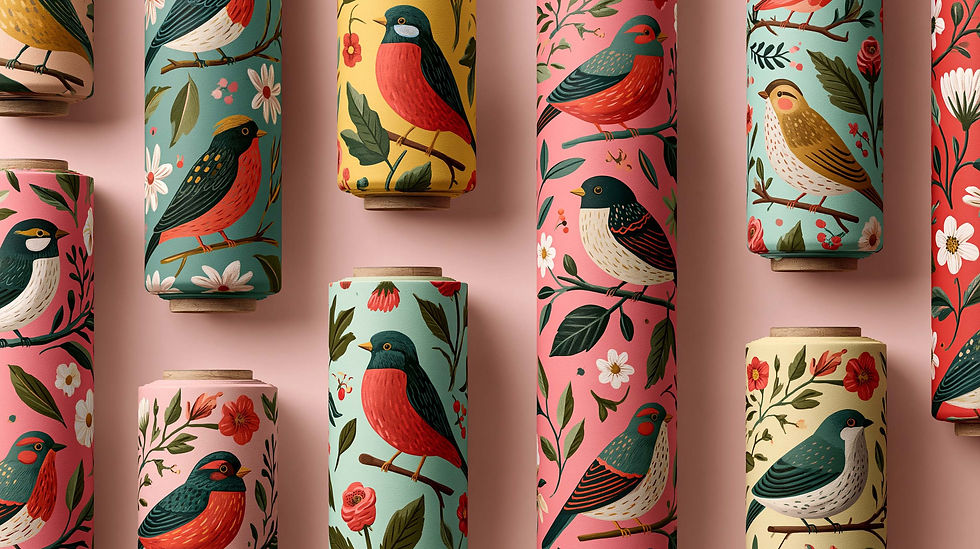
Your one original painting can be licensed to a fabric company, a wallpaper brand, a puzzle maker, a phone case company, and a greeting card publisher – all simultaneously, all paying you – as long as none of those licenses conflict with each other. That's what makes it so powerful. It's not a product. It's a portable asset. That's what turns a single body of work into multiple revenue channels running at once.

What licensing actually pays
The internet is full of dreamy numbers without context, so let’s break them down.
Royalty rates in art licensing typically range from 3% to 10% of the wholesale price of the product. Not retail. Wholesale, which is usually about half of retail. So on a greeting card that sells for $5.99 at Barnes and Noble, the wholesale price might be $3.00, and your royalty at 5% would be fifteen cents per card sold.
That sounds small, but if that greeting card sells forty thousand units over an eighteen-month contract – which is a modest performance for a well-placed design – that's six thousand dollars from a single card. Now imagine you have twelve designs licensed to that same publisher, six licensed to a fabric company at slightly higher rates, and four licensed to a puzzle brand. Suddenly you're looking at a five-to-six-figure annual income from art you finished years ago.
Some contracts are structured differently. Flat-fee licenses (also called buyouts) pay you a single lump sum – typically anywhere from $200 to $5,000+ per design depending on usage, territory, and the size of the buyer. Advance-plus-royalty deals give you money upfront that gets recouped against your royalties. Exclusive licenses pay more than non-exclusive ones because you're taking that design off the market for everyone else.
The important thing to hold onto is that licensing is a compounding income stream. It's slow to start and generous to those who stay. Pricing across licensing, originals, and products is worth studying on its own.

The main licensing categories for artists
Here is a list of licensing categories that work for artists:
Greeting cards and stationery. The most accessible entry point. Companies like Papyrus, Trader Joe's stationery lines, and dozens of independent publishers license from illustrators constantly.
Fabric and surface pattern. Spoonflower is the well-known one (and works a bit like print-on-demand but your product/fabric is listed in their store), but the real money is with established fabric houses (think quilting cotton companies, home textile brands) and licensing to bedding and apparel brands.
Wallpaper and home decor. Rifle Paper Co. built an empire here. Wallpaper, throw pillows, ceramics, kitchen textiles.
Puzzles, games, and gifts. Puzzle companies license hundreds of designs a year. This is a genuinely underrated pocket of the industry.
Publishing and editorial. Book covers, magazine illustration, editorial pieces. Different from long-term licensing but often paired with it.
Corporate and hospitality. Hotels license art for rooms. Corporations license for offices. Restaurants license for menus and murals.
Fashion and accessories. Scarves, tote bags, apparel prints. Coach, Kate Spade, and dozens of smaller brands run licensing programs.
Digital and licensed collections. Canva, Creative Market, and similar platforms license artwork for digital use. Lower rates but faster payouts and volume.
Each of these has its own culture, its own pricing norms, and its own etiquette. The good news is you don't need to know all of them at once. You need to pick one that fits your work (and makes you excited) and start there.

What licensors are actually looking for
If you take nothing else from this post, please save this somewhere on a post-it or in your notes: Licensors are not looking for the most technically dazzling art. They're looking for cohesive collections that solve a merchandising problem.
A single stunning painting is much less useful to a licensor than eight coordinated designs that share a color palette, a theme, and a mood – because they can build a product line around it. A holiday collection with twelve coordinating patterns is worth far more than one masterpiece in the licensing world.
They also want to see:
Consistent style across a body of work (they need to know what they're getting)
Trend awareness without trend-chasing (evergreen appeal with a modern edge)
A body of work large enough to build from (usually 20-50+ finished pieces minimum before they'll seriously look)
Professional presentation (nothing fancy, just clean flat files, clear labeling, high resolution)

How to actually break in
The path is more accessible than the industry pretends it is, especially with AI to help us find potential licensors and who to reach out to for each of them.
Build a licensing-friendly body of work. Before you approach anyone, look at what you've already made and ask which pieces would work on a product. Twenty to fifty finished pieces in a consistent style is a working portfolio. If you don't have that yet, that's your first project.
Study the market before you pitch. Walk through (or look online) a HomeGoods, a Target home aisle, a Papyrus, a Barnes and Noble seasonal section. Notice which artists are getting licensed and what their work has in common. That research is worth twenty hours of pitching.
Attend Surtex or Blueprint (or watch the recap coverage). Surtex is the industry trade show where surface pattern designers show work to licensors. You don't need to exhibit to learn from it. Following it for one year helps you learn the industry.
Pitch directly, and pitch small first. You do not need an agent to start. Most independent greeting card, stationery, and fabric companies accept direct submissions. Look at their submission guidelines, follow them exactly, and pitch collections rather than single pieces.
Learn to write a proper collection description. Two to three sentences about the mood, the story, and the intended product category. This is the piece most artists skip, and it's the piece that makes buyers pay attention.
Consider an agent when you have traction, not before. Good licensing agents take 30-50% of your royalties and are worth every cent – but they take on artists who already have proof of concept. Get one or two licenses first. Then consider representation.
The Licensing Legwork Prompt
Copy the whole prompt into your favorite AI. Replace the bracketed sections in STEP 1 with your specifics. Everything else stays as-is.

What not to do
A few things I want to spare you.
Do not give away work "for exposure" in your first licensing conversations. Exposure does not pay rent. A small paying license is a thousand times better than a large unpaid feature.
Do not sign anything with a perpetual, worldwide, exclusive, all-rights clause without understanding what you're giving up. That is a buyout dressed up as a license, and it can cost you six figures over the course of a decade.
Do not underprice yourself out of fear. Standard industry royalty rates exist for a reason. If a company won't pay the standard, that isn't the company for you.
And do not wait to feel ready. The industry has no gatekeeper checking whether you've earned the right to license. It has buyers looking for the next collection that fits their product roadmap. That could be yours.
Why licensing pairs beautifully with everything else you're building
Here's what I love about licensing, and why it fits so naturally alongside the print-on-demand work I talk about constantly. Licensing is slow, relationship-based income that compounds year over year. Print-on-demand is faster, more entrepreneurial, and gives you direct-to-consumer control. Together they build a portfolio of income streams where your existing artwork earns from multiple angles at once.
The artist who licenses one collection to a stationery company and also sells that same style through their own print-on-demand shop is not double-dipping. She's leveraging one body of work across two entirely different revenue models – and building the kind of income architecture that actually creates freedom.
This is what I teach inside Open Studio. Not one income stream, but a studio full of them, all built from the work you already love making.

Where to go from here
If licensing has been on your mind for months and you're ready to actually understand the big picture – how to build a collection, how to price your work, how to identify the right buyers, how to pitch without sounding like everyone else – help with this exists inside Open Studio. It's where I get to answer the specific questions, share the templates, and help you build the exact income architecture that fits your work and your life.
You have the art piled up. Let’s start making money with it.
💛 Join Open Studio here: www.youryellowstudio.com/open-studio-invite
Licensing is not reserved for someone else. It's an income model built for exactly the kind of artist you already are.


Comments